Blog

Leadership, Followership, & Consensus

I was recently presented with these words, reported to be from former UK Prime Minister Margaret Thatcher: “Consensus is the absence of leadership.”

Coming from a perspective of intense interest in the subject of followership and group dynamics, this perspective instantly set off in me varying degrees of umbrage and frustration. Continue reading “Leadership, Followership, & Consensus”

Review of Leadership Goals

Two years ago I made a profound transition. Having worked in the same organization since 2006 in various follower roles, I was asked to step into a formal leadership position.

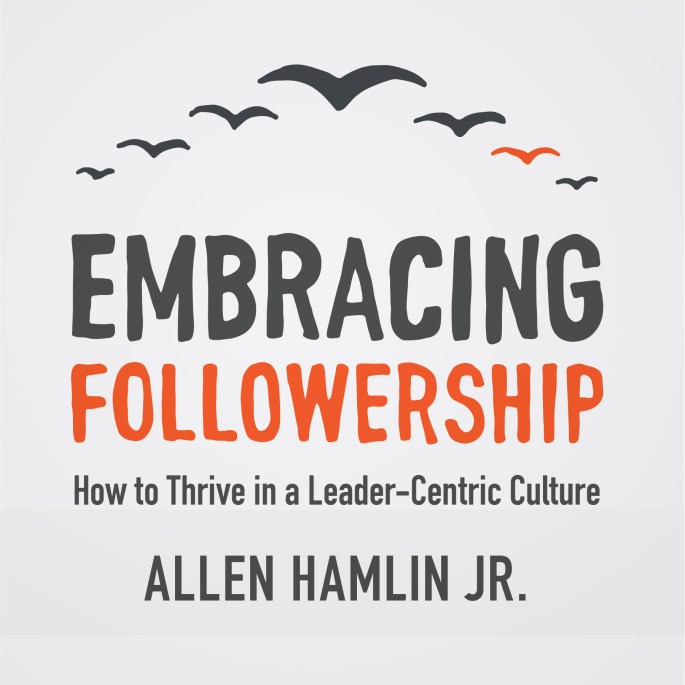
The timing was ironic. I had recently completed the editing of the manuscript for my book, Embracing Followership: How to Thrive in a Leader-Centric Culture, in which I several times had stated that I’m a follower (not a leader). When the organization needed to increase its capacity to provide better support for teams and having asked me to provide that support for those working in various parts of the UK, I found myself needing to update the book’s content as I had stepped into a new realm of responsibility. Continue reading “Review of Leadership Goals”

Leadership Ltd. Inc.

Leadership is a daunting enterprise.  Challenges to leading effectively come from many avenues, and both internal and external factors must be addressed in order to create an ideal environment for both leaders and followers to contribute their very best. Continue reading “Leadership Ltd. Inc.”

How do you promote a clone?

I’m a fan of the Star Wars saga; as a boy who grew up in the 1980’s, I could hardly escape it.

While I will always treasure the original trilogy for the quality of their storytelling and special effects, I do appreciate the more recent films for the additional backdrop they create for this grand space opera.

Episode II, which was released in 2002 and entitled “Attack of the Clones”, has stirred up in me some recent thinking about followership. (And also taken me back to some of my original inspiration in considering followership: the rodents known as lemmings.)

In the film, a genetically engineered army is created. What caught my attention is that this army, composed entirely of soldiers cloned from a single original, consists of a wide variety of units and ranks. There are pilots and artillery specialists, tank drivers and special forces commandos. And there are captains and cannon fodder.

It made me ask the question, “How do you promote a clone?” Continue reading “How do you promote a clone?”

Followership is Not New

I had a recent interaction with a website editor that made me smile.

In creating the content tags to be used for future posts, the editor didn’t want to include ‘followership’ as one possibility because it’s too new of a term and thus needs further development and explanation; he posited that readers will need instruction and understanding before they’ll connect with the concept.

Being personally passionate about the topic of followership, I must admit that my initial reaction was umbrage, a bit annoyed and aggrieved that something so intrinsic to life, work, and relationships could be thought to be too new to highlight. But eventually, as I reflected on the journey of ‘followership’, I smiled. Continue reading “Followership is Not New”

At Our Best When We’re Out of Sync

My wife and I are currently expecting the birth of our first child. As a result, we’re taking more walks than usual, in order to encourage our little one to make her arrival (see my video on the author page). We enjoy walking while holding hands, and my wife has made a keen observation: it’s most comfortable for us to walk together when we’re exactly out of step with one another. Continue reading “At Our Best When We’re Out of Sync”

Encouraging Ownership

One sentiment that has led to unhelpful division between leadership and followership is to believe that leaders are the ones who have (and sell) the vision, while followers are the ones who work to fulfill it.

When the organization’s leadership is setup as the only ones through whom vision can flow (I was part of one such organization), there is an inherent disempowering of followers, and an implicit message that vision–and thus the ultimate driving force behind any endeavor–is the purview of the leaders alone. Continue reading “Encouraging Ownership”

A Critical Oversight in ‘Team’

It’s often said: There’s no ‘I’ in ‘team’. When we think about team, we’re supposed to think about the collective unit, a group joined together, without individual ambitions getting in the way.

But, we don’t actually do that.

Nor should we. Continue reading “A Critical Oversight in ‘Team’”

Sheep & Sheepdogs

Given the option of being labeled a sheep or a sheepdog, which would you rather be?

Being called a sheep is perhaps the most common negative image of followership–often intended to portray mindlessness, weakness, simplicity.

Who wouldn’t rather be a powerful and productive sheepdog? Continue reading “Sheep & Sheepdogs”

Excerpt: No Leader is an Island

A sample chapter of Embracing Followership has just been released!

You can find “Chapter 24: Displaying Dependence” available as a standalone article on this external website: https://www.biblicalleadership.com/blogs/no-leader-is-an-island/ Continue reading “Excerpt: No Leader is an Island”

1st Anniversary Giveaway!

In celebration of the 1st anniversary of publication (Feb 24), there are 3 signed copies of Embracing Followership up for grabs! Enter through this Goodreads giveaway between February 18-26, 2017! (sorry, giveaway now closed) Continue reading “1st Anniversary Giveaway!”

Significance: From Potential to Participation

In our exploration of followership, we have oftentimes addressed the aspect of identity: followership is not merely an occupation, but a deeper part of who we are and what we have to offer.

Having a firm grasp on one’s identity is extremely valuable; being able to clearly answer the question “Who am I?” provides an important resource for participating with excellence and making your necessary contributions.

But there is an additional question to address. Continue reading “Significance: From Potential to Participation”